Serving Bell, CA and surrounding areas. (213) 953-8125
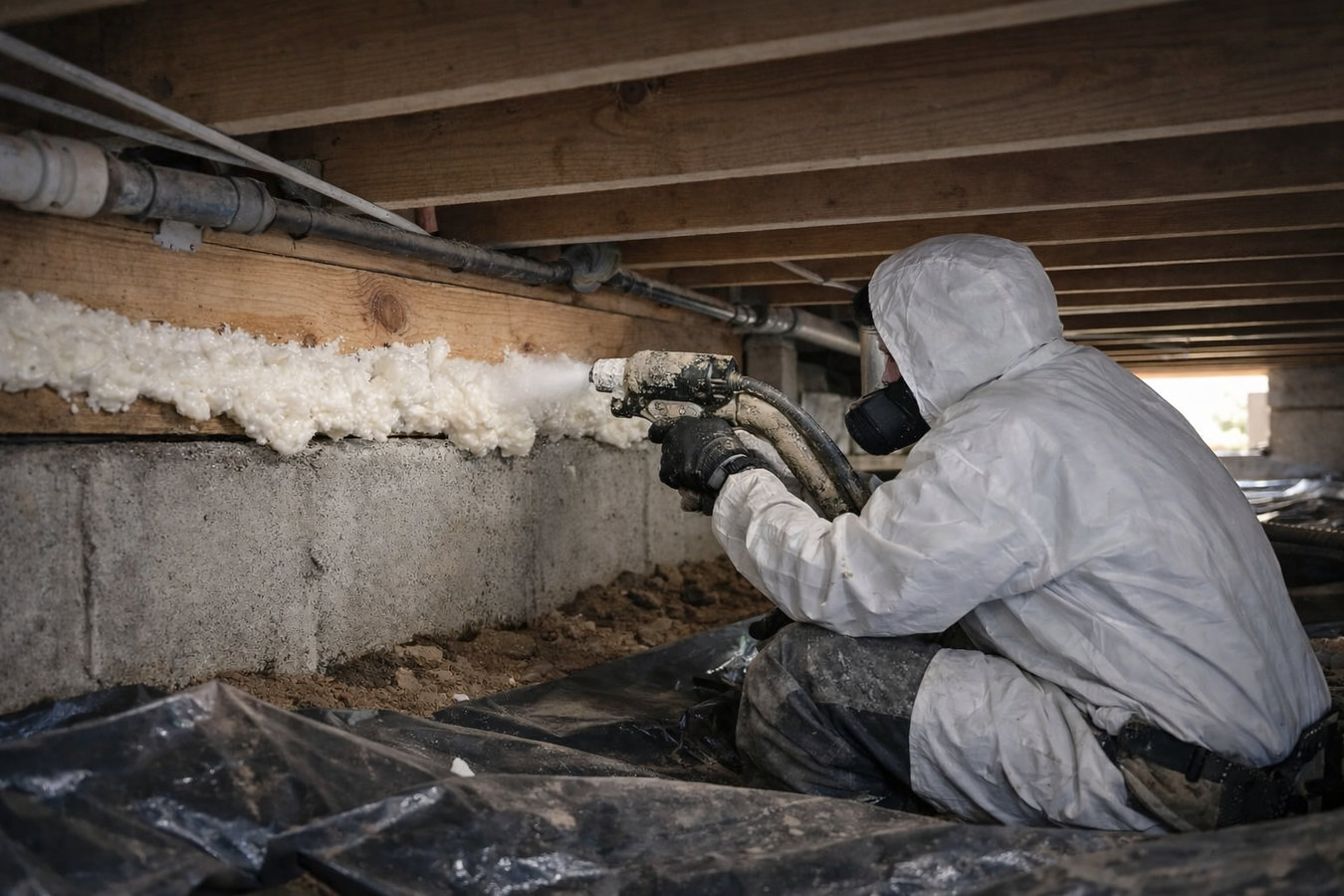
Cold floors, musty odors after rain, and rising energy bills often trace back to an uninsulated crawl space. We fix that with insulation built to handle Bell's moisture and pest conditions.
Crawl space insulation in Bell, CA acts as a thermal blanket between the ground and your living space above, reducing heat loss in winter and heat gain in summer, with most jobs completed in a single day and results you can feel in your floors within the first cool month.
Bell's housing stock is mostly older homes built when crawl space insulation was minimal or skipped entirely. If your home was built before 1980, whatever was originally installed has likely compressed, sagged, or been damaged by the ground moisture and rodent activity that are both common in this part of LA County. The result is floors that feel cold in winter, higher heating and cooling bills, and sometimes a musty smell that intensifies after rain.
Crawl space insulation works best as part of a complete approach to the home's thermal envelope. Many homeowners also address wall insulation at the same time, and pairing the insulation work with a crawl space vapor barrier is often the most effective way to stop moisture at the source.
If you walk barefoot across your kitchen or living room floor in January and it feels noticeably cold, heat is escaping through the floor into an uninsulated crawl space. Bell's winter nights regularly drop into the low 40s. Without insulation, that cold air sits right under your feet, and your heating system runs longer to compensate.
A musty or earthy odor that intensifies after winter rains is a classic sign that moisture is building up in your crawl space and making its way into your home. Bell's clay-heavy soils hold water after rain and release it slowly. If you smell it in your floors or lower walls, it is worth having someone look underneath.
If your gas or electric bills seem out of proportion to your home's size, a poorly insulated crawl space could be part of the reason. Heat and cool air escape through uninsulated floors, forcing your system to work harder. This is especially common in Bell's older homes, which were built before modern energy efficiency standards.
If you have ever peeked into your crawl space and seen insulation hanging down, falling off the joists, or looking dark and wet, that insulation is no longer working. Damaged insulation provides little protection and can trap moisture against the wood, making things worse. This is a clear sign replacement is overdue.
The right crawl space insulation approach depends on your home's specific conditions. For most Bell homes with accessible, dry crawl spaces and no active moisture problems, fiberglass batts fitted between the floor joists are a cost-effective solution that installs quickly. For homes with clay soil moisture concerns, a history of pest activity, or older construction where the crawl space has had years of neglect, spray foam or full encapsulation often delivers better long-term results - it addresses moisture at the source rather than just slowing heat transfer through the floor.
We also install crawl space vapor barriers as a companion to insulation work, and for homes where old, damaged material is in place, we handle the removal first so you are not insulating over an existing problem. If you are addressing the home broadly, wall insulation can be coordinated as part of the same project to maximize your comfort improvement.
Best for dry crawl spaces with good joist access and no active moisture or pest issues - installed quickly with minimal disruption.
Best for crawl spaces where moisture, pest gaps, or irregular framing make batts a poor fit - foam seals and insulates in one application.
Best for Bell homes with ongoing moisture problems or clay soil exposure - seals the entire space to control humidity at the source.
Best for homes where old, rodent-damaged, or collapsed insulation needs to come out before new material can be installed correctly.
Bell sits on flat, low-lying land in the Los Angeles Basin, and the soils here contain significant clay content. Clay soils hold moisture after rain and release it slowly - meaning the ground beneath your home stays damp longer than it would in sandier areas. That ground moisture evaporates upward into an uninsulated or unsealed crawl space, which can lead to wood rot, mold, and insulation damage over time. Most of Bell's older homes were built with minimal crawl space treatment, so this moisture pathway has often been open for decades.
Rodent pressure adds another layer. Bell's urban density creates conditions where rats and mice move freely between properties, and attic and crawl space insulation is a prime nesting target. We serve homeowners across the area, including Maywood and Cudahy, where the same combination of older housing stock and urban pest pressure applies. California's Title 24 energy efficiency requirements also mean that insulation installed during qualifying improvements must meet specific standards - an experienced contractor will confirm the work complies so you are not asked to redo it later.
We ask a few basic questions about your home's age, any moisture or pest history, and whether existing insulation is in the crawl space. We reply within one business day and schedule an in-person visit before any work is agreed to.
A technician visits your home, accesses the crawl space, and checks the condition of any existing insulation, signs of moisture, pest evidence, and space measurements. The visit takes 30 to 60 minutes and results in a written estimate explaining what was found and what we recommend.
The crew removes old material if needed, then installs the new insulation - either fitting batts between the floor joists or applying spray foam to the crawl space walls. Most jobs are finished within a single day with crew cleanup before they leave.
Before the crew leaves, we share photos taken inside the crawl space so you can see the finished work without going in yourself. We tell you what to watch for going forward and coordinate any required inspection with the city if permits were needed.
Free estimates, written quotes, and no obligation. We reply within one business day.
(213) 953-8125We do not make a crawl space recommendation until we have been under your home and seen what is actually there. Bell's older housing stock means each home has its own history - moisture, pests, original construction quirks. We look first, then tell you what makes sense for your specific situation.
California's energy efficiency requirements apply to insulation work, and getting it wrong means redoing it. We install to state standards so the work holds up to inspection - important both for your peace of mind and for the home's value if you ever sell. We document every job and hand over the paperwork when we are done.
Installing new insulation over an active pest or moisture problem is money wasted - it will fail quickly. We check for both before recommending a solution, and we coordinate removal of contaminated material before anything new goes in. The EPA recognizes crawl space moisture as a significant indoor air quality factor - we take that seriously.
Bell's combination of clay soils, seasonal moisture, and urban pest pressure means crawl space insulation done poorly will fail quickly. Quality insulation, properly installed and protected from moisture, can last 20 to 30 years or more. We do it right the first time so you are not calling someone back in five years.
Homeowners in Bell's older neighborhoods deserve a contractor who understands the specific conditions under these homes - not just a crew that shows up and staples batts without checking what they are working with. That is the difference between insulation that performs and insulation that fails inside a few years.
Pair crawl space work with wall insulation to address heat transfer throughout the entire home envelope.
Learn MoreA vapor barrier works alongside crawl space insulation to stop ground moisture before it reaches your home.
Learn MoreBell's rainy season is the worst time to discover your crawl space is unprotected - call now to lock in your installation date before the schedule fills.